How I Went From Nshima Novice to Full-Blown Fan
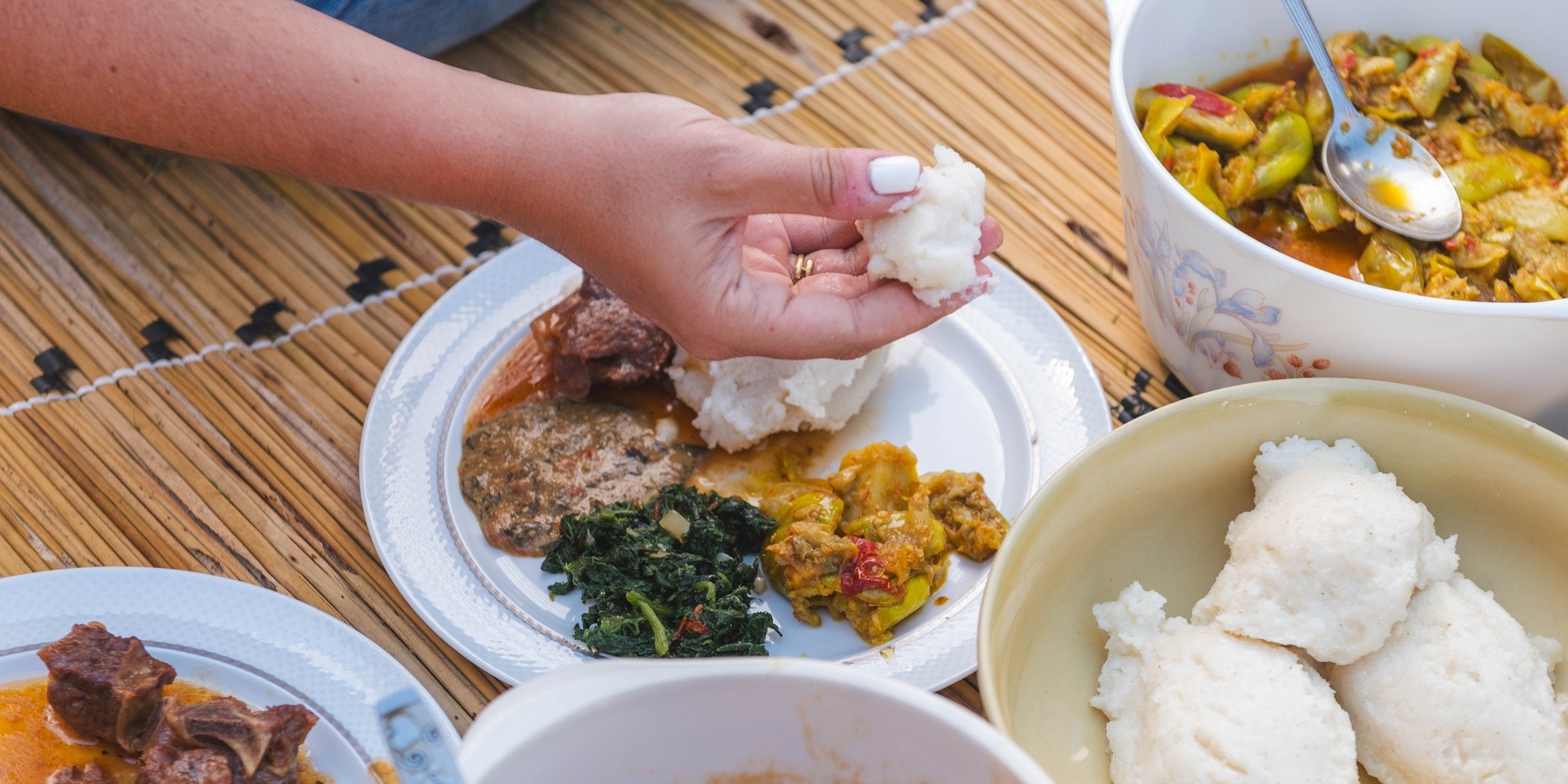
Zambians are delightfully obsessed with their staple food, nshima.
Nshima is just flour and water, and eaten once a day, or twice, or, honestly, whenever possible. People joke openly about it: you can serve a full banquet of every dish under the sun, but if there’s no nshima, someone will announce they “haven’t eaten.”
When I lived in a rural village, men would propose to me, dreaming of a ticket to America. I’d laugh and warn them that Americans don’t eat nshima. Every time, they’d pause, shake their heads, and reconsider their future. A life without nshima? Not worth the risk.
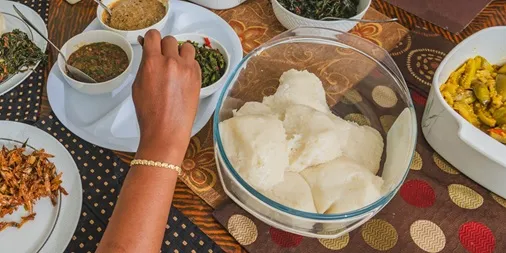
To me, nshima was just flour and water, how boring. But somewhere after a few years, something wild happened: I traveled, and I truly missed it. Somewhere along the line, this simple, hand-eaten dish had become my comfort food. How did that happen?
I was not an instant convert to nshima.
Zambians are always amazed when they discover I didn’t grow up with a staple food. Adjusting to nshima, every day, sometimes several times a day, felt like joining a new culinary religion.
I quickly discovered the charm of having a staple food. Meal prep became blissfully simple. Nshima pairs with everything: seasonal vegetables, grilled meat, chicken stew, fresh fish. No one at the table ever complains about how it’s cooked. Before long, I realized something else: Once you get used to that pleasantly full, satisfied feeling that only nshima delivers, nothing else hits quite the same.
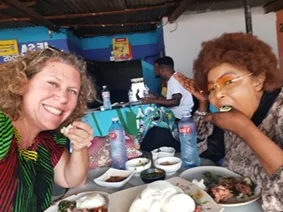
So yes, I eventually fell in love with nshima, but only after discovering, one humbling lesson at a time, that I was wrong about everything: the flour, the hand-eating, the cooking, the presentation, and even when on earth you’re supposed to wash your hands.
Five things I got wrong about nshima, the Zambian staple food:
1. I thought nshima was only made of corn flour.
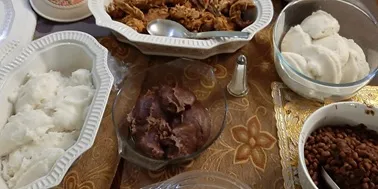
The most common ingredient is white corn flour (maize meal or mealie meal), which is processed in two ways: Breakfast meal (refined) and roller meal (processed with outer husks on the kernels). Nshima made with breakfast meal is most common in restaurants. Roller meal recently had a cultural rebranding as a healthier nshima and now often shows up on the table.
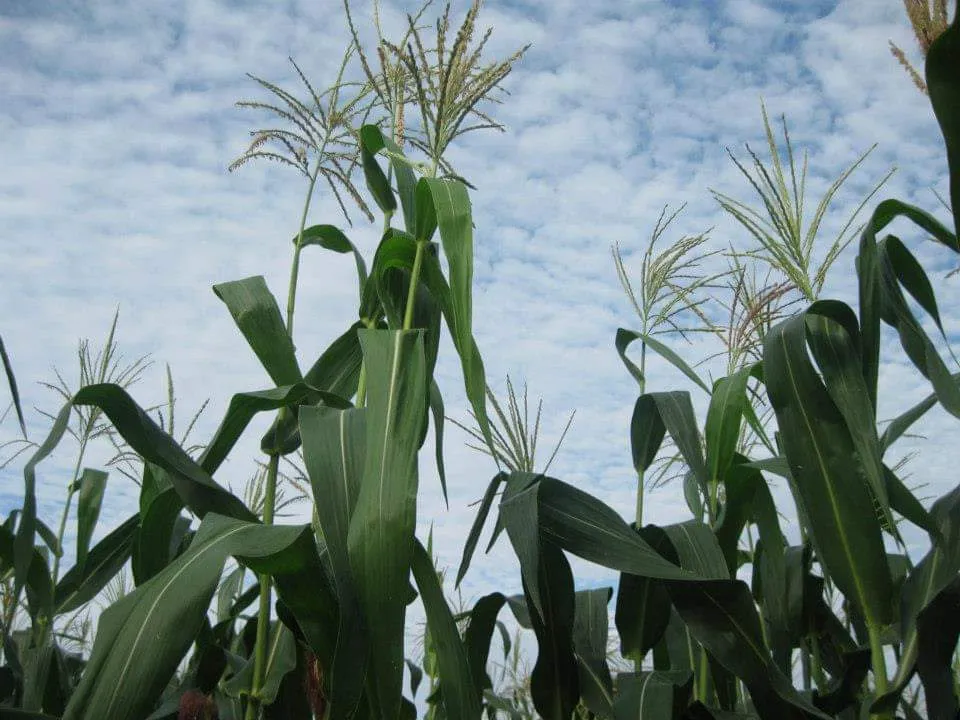
It wasn’t until I traveled to other provinces of Zambia until I realized nshima comes in many variations around Zambia. I had several “Wait… you can make it with what?!” moments.
In Northern Zambia, I ate nshima made of millet flour. In Luapula Province I ate nshima made with cassava flour or a mix of cassava and maize. In Northwestern Province, I ate nshima made with sorghum flour.
And when I returned home to Eastern Province, I had a new appreciation of their style of nshima which is made of pounded and fermented maize, giving a very fine white flour with a slightly sour taste. Delicious!
2. I thought cooking a two-ingredient recipe would be straightforward.
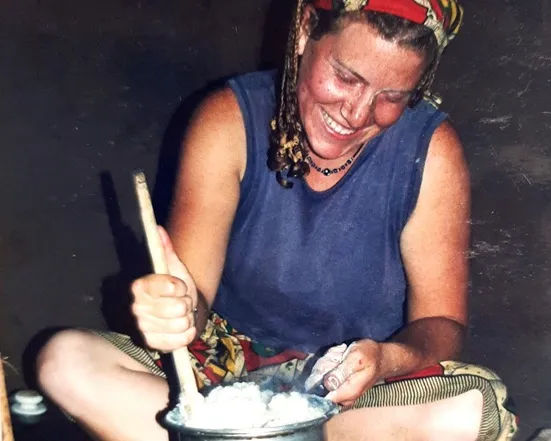
Spoiler alert: There is no recipe for nshima. No one measures the water; no one measures the flour; and the proportion of flour to water changes based on the size of the pot. The only constant is that it requires a very strong arm to cook. Once the nshima has bubbled nicely for an undefined period of time, the pot requires aggressive stirring with a wooden spoon. One time I cooked nshima in my biggest pot, and my stirring technique nearly dislocated a shoulder.
There are numerous other variations in cooking nshima. Some people soak the flour in water before adding to boiling water. The cooking time, temperature, and flavor changes based on how you are cooking it, such as on a wood fire, charcoal stove, gas stove, or electric stove.
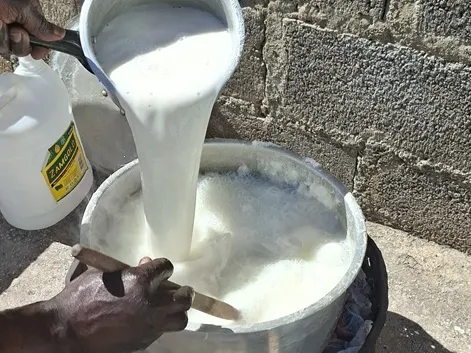
Want to try to cook it yourself? Try these videos with demonstrations on how to cook nshima with breakfast meal or with a mix of millet and cassava flour.
You can probably imagine how many times I tried and failed at cooking nshima until I finally figured out my own technique. My first attempt looked like wallpaper paste, but thanks to several teachers along the way, I finally knew exactly how to eyeball the water-flour proportion as long as I used one specific pot. And then, after 20 years of cooking nshima when I thought I was a pro, I took a Zambian cooking class for fun and discovered that my technique made a loud “thumping” noise that was considered offensive!
3. I thought eating nshima with my hands would be easy.
Turns out “just use your hands” is not helpful advice for someone who grew up measuring everything with cutlery. Nshima is finger food, eaten in a specific way with the right hand. When you ask a Zambian how to eat nshima, you’ll get a wonderful hand pantomime of grasping a small lump, balling it up, and making a small dent with the thumb for grabbing relish. It’s a perfect micro food delivery system from the plate to your stomach.
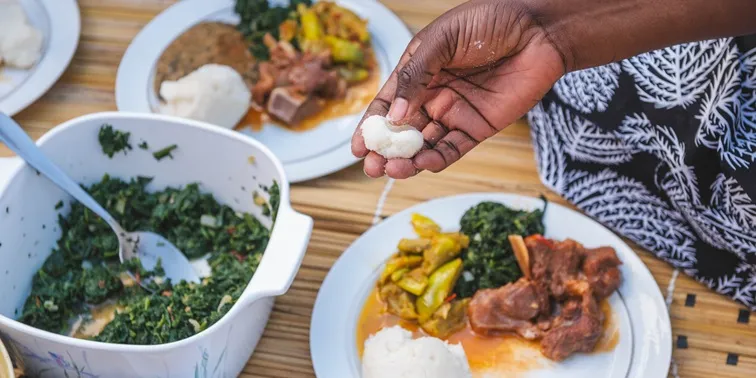
Apparently my fingers are not natural nshima utensils. At first, I scooped too little, then too much, and often slopped a trail of okra soup down my shirt. I tried to confidently grab steaming hot nshima from the bowl, only to sheepishly decide it was too hot to hold and was humbled as someone at the table moved a lump to my plate. And I learned that the ultimate skill is mastering the balance of using the last ball of nshima to polish off the last bit of relish on the plate.
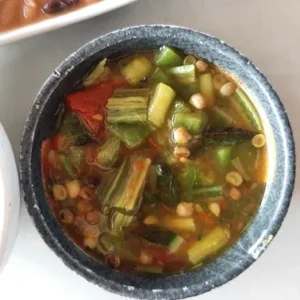
4. I thought it didn’t matter how nshima looked when served.
When I started cooking nshima for myself, I would literally dump the pot upside down onto my plate. It would land into one steaming lump with jagged and malformed edges. This is not proper Zambian etiquette.
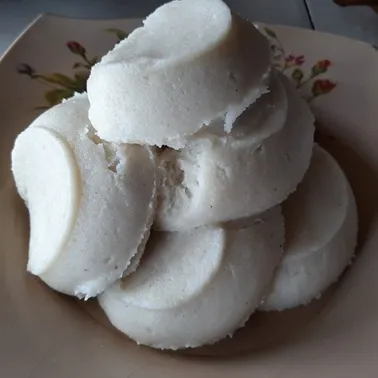
It turns out shape, texture, and smoothness are a big deal. There is a special spoon used to dish nshima out into smooth, perfectly formed lumps. Serving nshima in this way signifies care in preparation, practicality, and respect.
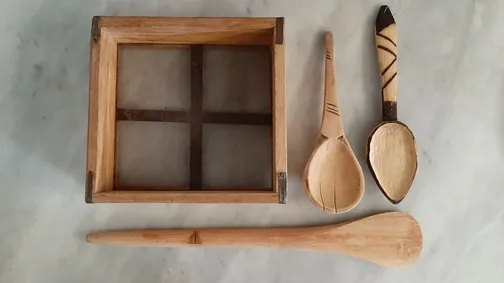
The firmness of nshima also matters. My Zambian family will openly comment on the firmness of my nshima, benchmarking against an unwritten standard which lies between the harder ugali of East Africa and the softer nsima of Malawi. Zambian nshima is “soft-ish.”
5. I thought I could wait until everyone was done eating before washing my hands.
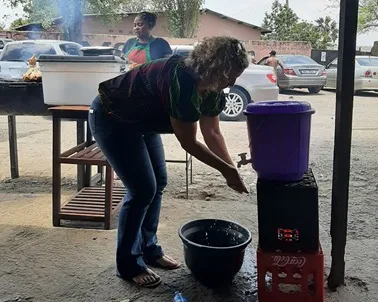
Washing hands before and after every meal is standard practice in every Zambian home, and often the host or the person sitting next to you pours clean water over your hands into a basin with soap. When I finished my nshima, I would politely say “I’m satisfied” (nakuta) and then wait for others to finish before washing my hands again.
I quickly learned that procrastinating on hand-washing turns nshima into concrete. Now I know that it is acceptable to ask someone to pass the basin of water to me, or to walk over to the handwashing station to wash hands, even if others are still eating. The last thing you want to do as you slip into the “nshima coma,” a comfortable state achieved by overeating, is aggressive scrubbing to remove hardened nshima from your palms.
Who knew that a simple mix of flour and water could be something I craved?
I started as a clueless American, and now I’m the one demanding extra lumps to enjoy with my favorite relishes. Lesson learned: never underestimate nshima.
Zambia travel tips:
- “Matebeto” restaurants have lunch buffets of nshima plus a full range of “relishes” (side dishes). Ask about different kinds of nshima, such as breakfast, roller, and millet nshima.
- Common vegetable relishes are sweet potato leaves (kalembula), pumpkin leaves (chibwabwa), amaranth leaves (bondwe), and okra (telele.) “Ifisashi” means the leaves are cooked in peanut flour.
- Most buffets have a choice of T-bone, grilled whole fish, and chicken. “Village chicken” is free range, and a tastier option than broiler chicken.
Curious to know more about what to eat in Zambia? Check out our Jiranileo Zambia destination page for a downloadable guide to eating in Zambia. Happy travels!
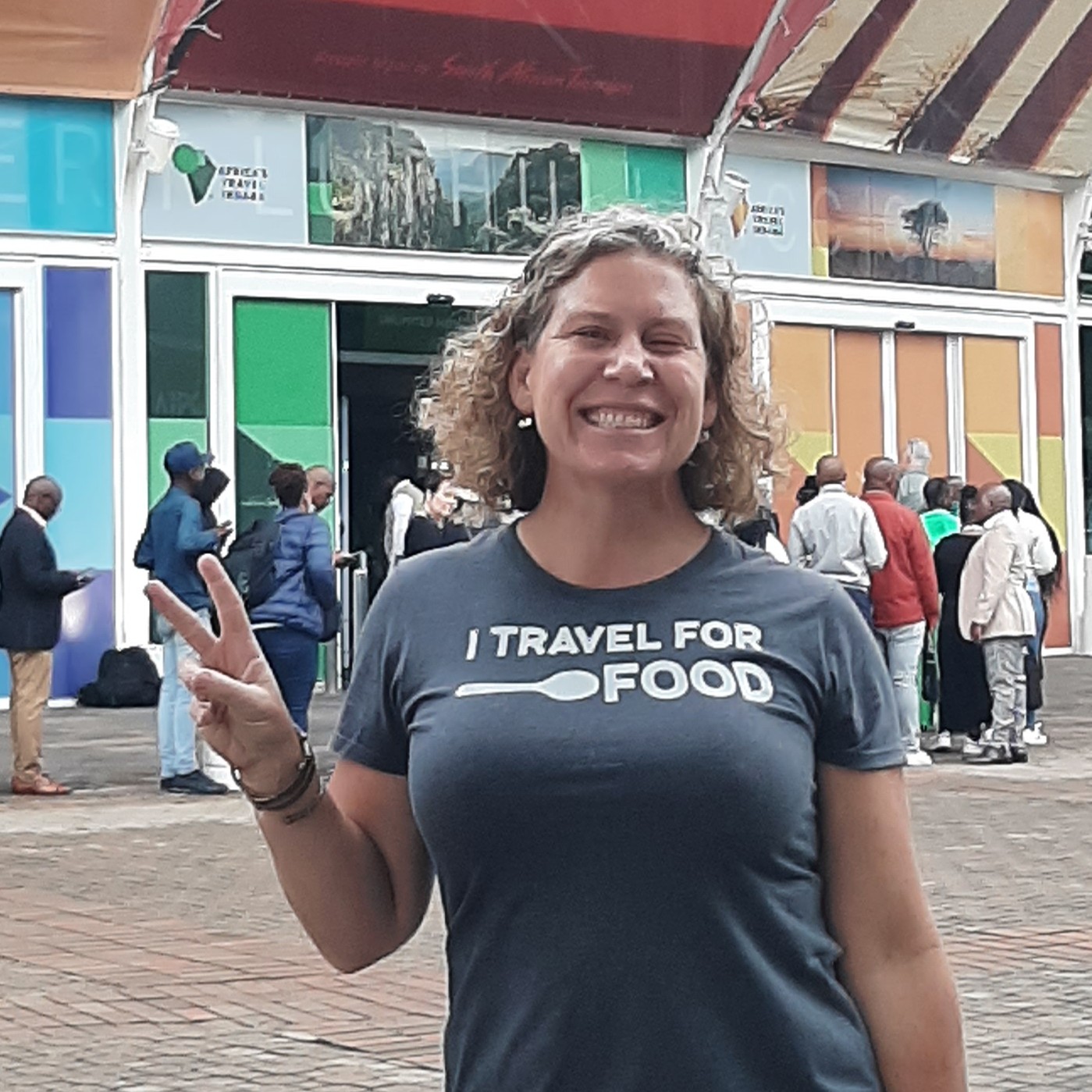
Meet the Author
Beth Jere
After calling Zambia home for more than 20 years, Beth has learned that the country reveals itself best through its food and shared laughter over meals. Her blogs invite you into the Zambia she knows, one meal and one story at a time.