How to find authentic Swahili Cuisine at the Kenyan Coast
Where can I find authentic Swahili cuisine in Kenya?
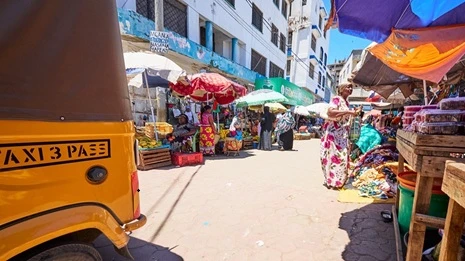
It’s not as easy as you’d think. Unlike Spain or Italy, where there’s a tapas bar or trattoria on every corner, in Kenya the tourists are shown more Western food options than Kenyan food. Along the Kenyan coast, there are restaurants offering shawarma and burgers; beach bars serving grilled calamari and chips; and hotel menus listing Ceasar salads and seafood pizza. While we enjoy these foods as much as the next person, it’s not comparable to authentic Swahili food.

Swahili cuisine is deeply embedded in the culture along the Indian Ocean coast, shaped by over 1000 years of international traders and settlers. Each visitor introduced recipes and cooking styles that merged into the Swahili cuisine, indigenous ingredients, and gastronomy culture. These recipes often take longer time to prepare from scratch, making them less convenient for standard restaurant menus but still eaten regularly in homes.
Here are our tips on how to find Swahili cuisine.
Take a morning walk for a Swahili breakfast
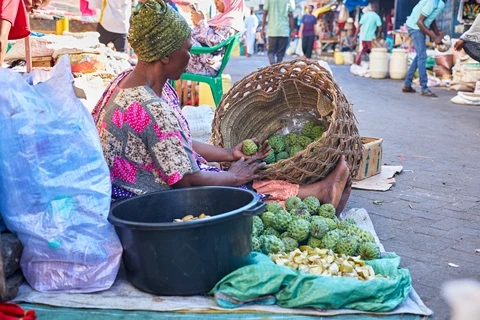
As the sun rises, coastal communities are on the move, whether coming from prayers at the mosque, heading to the market to buy the day’s ingredients, or commuting to work by foot, bicycle, matatu (bus), or pikipiki (motorbike). At this early hour, the ingredients of Swahili cuisine are on full display: The fresh tuna offloaded from the fishing boats; the carefully sorted and stacked fruit; and the organized displays of colorful produce from the farms.
In the midst of all this activity, everyone is stopping for a relaxed breakfast, eaten polepole (slowly) in Swahili style. Most breakfasts are eaten on roadsides rather than in restaurants. In the city of Mombasa, look for benches on the side of the road in Old Town. In the Kenyan beach towns of Diani, Watamu, and Kilifi, look for small thatch buildings (makuti) which are often leaking a bit of smoke from the traditional stoves (jiko). Keep an eye out for roadside thermoses pouring out cup after cup of hot spiced chai.
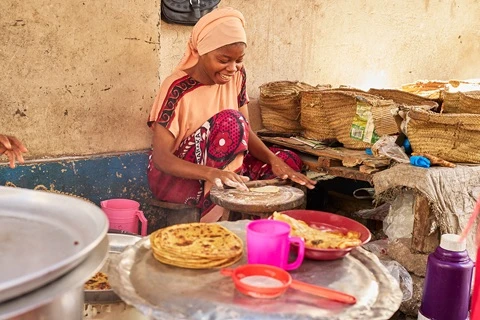
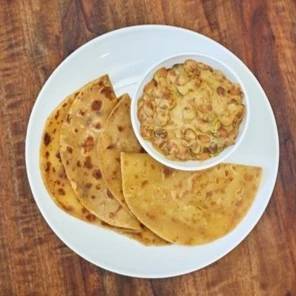
Admire the expertise of the women rolling out chapatis on small wooden tables and flipping them over in stacks. Join the men sitting on narrow benches and enjoy hot chapati and coconut beans. This start to your day with Swahili breakfast, hearing the sounds of Swahili greetings and immersed in the everyday life of the community, is the memory you want to savor.
Take a cooking class for a Swahili lunch
After several sweaty days walking in the hot sun in Mombasa, I found few local restaurants that offered traditional Swahili dishes. After consulting friends, I found three lunch options: Lulu’s Delish in Mombasa (a short tuktuk ride from Old Town); ordering delivery of home-cooked food (a few home cooks advertise weekly menus on social media); or taking a cooking class so that I could know how to shop and prepare my own traditional lunch. I opted for the latter.
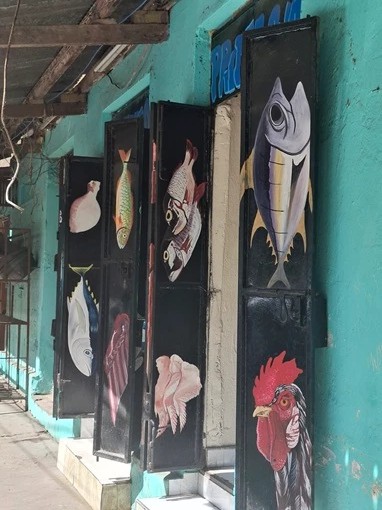
A cooking class usually starts with a visit to a local market, and likely one off the tourist track. Going with a guide reveals the traditional Swahili recipe ingredients such as the multitude of local legumes, the stacks of dried shark meat (a delicacy), and the orange tinge of sticky fresh tamarind.
The market also balances the traditional with the modern ways: Vendors chat on their cell phones while weighing produce on antique metal weighing scales. Electric grinders for coconuts replace traditional hand-grinders (mbuzi).
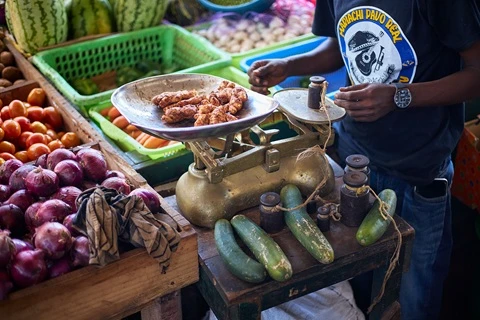
Walking around these markets at the Kenyan Coast can give an idea of the variety of ingredients in Swahili cuisine, but doesn’t reveal how those transform into the traditional Swahili recipes. Most ingredients are familiar to Western cuisine – carrots, onions, green pepper, beans – but in Swahili recipes they are pureed and mixed with spices and coconut milk.
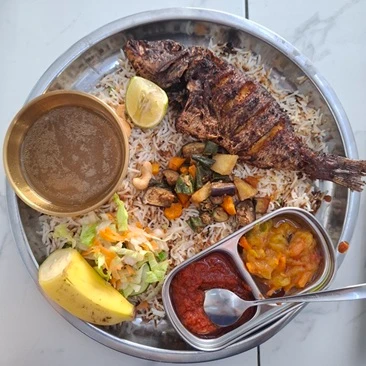
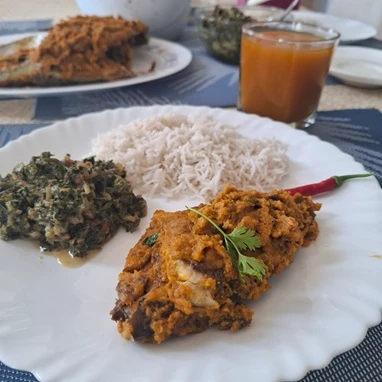
Instead of the grilled calamari and chips at the hotel, a cooking class can produce a Swahili meal of coconut rice, marinated rabbit fish (samaki wa kupaka), and indigenous green vegetables. (Want to learn how to cook this Swahili food? Book a cooking class with Jiranileo.)
Take an evening stroll for Swahili street food.
In the tropical climate of the Kenyan Coast, activity slows down in the heat of the day. However, just before sunset until late in the night, the streets come alive. Women sell both savory and sweet snacks on the roadside, such as fried patties of blackeyed peas (kunde bhajia), little sugary doughnuts (mitai), and beef samosas. Men slice and fry cassava crisps in large vats of oil, serving them with chili powder and a squeeze of lime. People gather at roadside tables for tiny cups of spiced coffee poured out from huge metal teapots, kept hot on the charcoal stove.
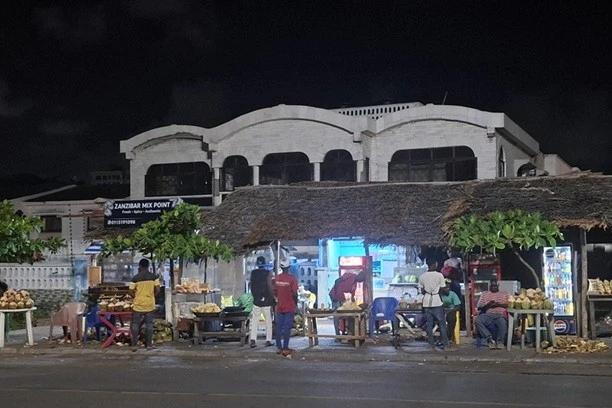
Rather than wandering around aimlessly looking for street food, it’s easier to join a Mombasa food tour. An evening street food tour takes you right to the hidden side streets with the best vendors, giving you a taste of the community’s favorite snacks with a helpful explanation of the ingredients and dipping sauces. (Want a guided street food tour? Book a street food tour with Jiranileo.)
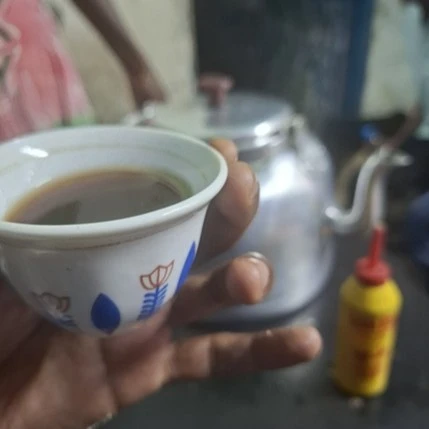
It is easy to find traditional Swahili food at the Kenyan Coast if you follow our tips.
In all my wandering, I found everyone I met to be incredibly friendly and welcoming. Here are the strategies I use to respect Swahili culture:
- Say some Swahili with a smile, especially Asante (thank you) and Karibu (you’re welcome). Here are some easy Swahili greetings you can learn.
- Cover your shoulders and knees. I bought a local dress (dera) in Biashara Street Market for 300 Kenyan shillings (about US $2) which covered me from neck to ankles yet was lightweight and airy for the hot weather.
- Ask permission before taking photos, particularly of women, and if you take food photos (like I do), it’s polite to buy something from the vendor.

Kenya Food and Travel Tips
Are the spices in Swahili food similar to Indian curries?
No, the spices in Swahili food are quite different than Indian curries. Swahili spice mixes are gentle and mild, not overpowering the natural flavors of the base ingredients (legumes, vegetables, rices, etc.) Swahili recipes do not use strong / hot chili powder, although a fresh hot chili pepper may be added for flavor. Of note, Swahili food does add cilantro to several dishes.
What can I expect from a Swahili cooking class?
Swahili cooking class is a hands-on lesson that teaches you to prepare a variety of traditional recipes using a mix of traditional and modern cooking styles, like a kifumbu to strain coconut milk and an electric blender to prepare fish marinade. Usually, a class will start with a trip to a local market to buy ingredients. Class always ends with a full meal of every dish you learned to cook.
What are the common Swahili snacks in Kenya?
There are many types of Swahili snacks, and usually the snacks do not have an English equivalent name. Here are some descriptions to help you order:
- Halwa – a soft, sweet, jelly-like candy made of ghee, sugar, and cardamom
- Simsim – sesame balls
- Katai – a shortbread biscuit
- Chefda – a savory crunchy snack mix, often with a mild chili flavor
- Mabuyu – bright colorful sweet and sour candy made of baobab seeds
- Tende – dates
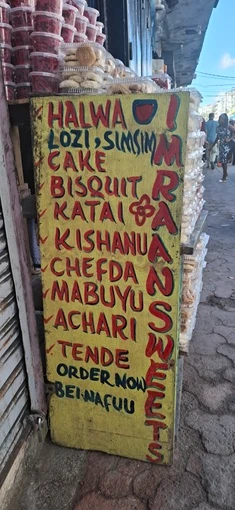
Curious to know more about what to eat in Kenya? Check out our Jiranileo Kenya destination page for a downloadable guide to eating in Kenya.
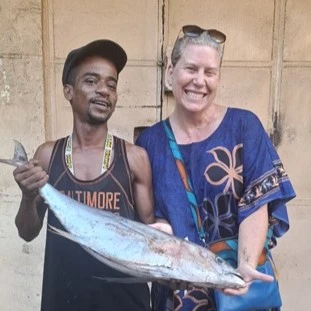
Meet the Author
Kenya Beth Jere
Beth Jere fell in love with Kenya as a university student, opening her eyes to the people and culture. She later lived in Nairobi for several years. Her blogs invite you into the Kenya she knows, one meal and one story at a time.