Feeling like family during a traditional cooking class in Kigali
A cooking class is an immersion in culture.
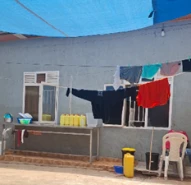
It’s a warm Monday morning in Rwanda, and I’m preparing my lunch on a charcoal stove. A resident rooster is strutting around my feet and someone’s underwear is flapping on the clothesline above me. Just yesterday I was attending a global conference in Kigali just a few kilometers away. How did I, a business traveler, end up here?
In a span of 24 hours, I went from sitting in cryptocurrency presentations at a sleek modern office to chopping vegetables in a home in one of the oldest neighborhoods of Kigali. While I’ll forget half the conference panels, I won’t forget the personal connections to Kigali that I made through this cooking class.
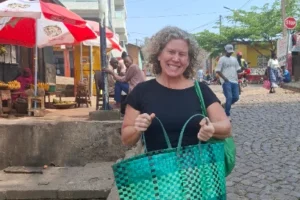
Stop 1: Arriving in a local neighborhood with a happy feeling of anticipation.
As soon as I exited my taxi in the Nyamirambo neighborhood of Kigali, I knew my day at the traditional cooking class would be memorable. I met my local guide, Angel, a youth travel and tourism student at Nyamirambo Women’s Center. The women’s center started in 2007, focused on addressing gender based violence, gender inequality, and discrimination, and has grown into a vibrant community cooperative that creates income for women through activities such as sewing, basket-making, and community tours.
Stop 2: Visiting the bustling vegetable shop.
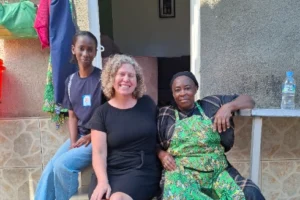
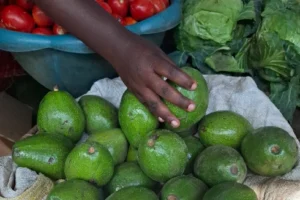
After a short introduction about the center’s activities, Angel and I walked with my cooking class teacher, Aminatha, down the hill to a small vegetable shop. (In hilly Kigali you always walk down or up!) The shop was busy that morning. The shopkeeper was unloading a large sack of freshly picked bean leaves and amaranth leaves. A stock of fresh avocado was delivered on a basket balanced on a man’s head. Neighbors gathered to pick through the fresh deliveries.
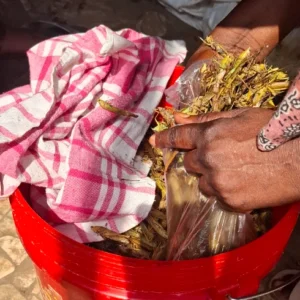
Rwandan food is largely vegetarian and the main daily protein source is beans. Meals are rounded out with beef, goat, or fish, but today I was lucky to see a unique protein delicacy at the shop. A woman lifted the cloth off a red bucket and unveiled grasshoppers (nsenene), a seasonal treat imported from Uganda. My inner foodie almost exploded with delight at seeing this hidden piece of East African food and culture. I love nsenene, having snacked on them frequently in Tanzania. At the shop, she packed handfuls into small bags for customers and then strolled up the street with the bucket.
Stop 3: Walking to my cooking class teacher’s home.
Leaving the shop with a full basket of vegetables, we walked back up the hill along the cobblestone road. Angel and I followed Aminatha up the hill to her blue metal gate, which opened into a small courtyard shared by four families. Her neighbors lead their normal lives around our cooking class, which is held in the center of the courtyard. A woman mopped in a doorway; neighbors came in and out of the gate and disappeared into doorways. A blue tarp flapped in the breeze above us, giving protection from the fickle Rwandan weather that simultaneously had blaring sun above and the sound of thunder in the distance.
Stop 4: Cooking class in the shaded courtyard
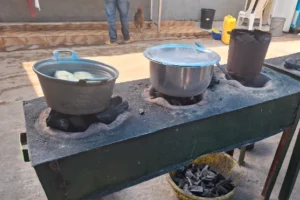
Aminatha has led Rwandan cooking classes in her yard since 2013, and her expertise shows. When we arrived, she had already prepped her workspace, a long metal table and a locally-made six-burner charcoal stove. We offloaded our purchases and washed all of them thoroughly before chopping and cooking.
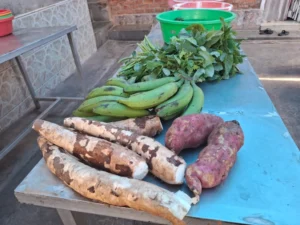
Aminatha was calm and organized, coordinating preparation of seven local dishes on the charcoal stoves, not once burning anything. Graciously, she didn’t show any glimpse of impatience with my awkward stirring of the potatoes, my uneven peeling of the plantains, or the quality of my pounding of the boiled amaranth.
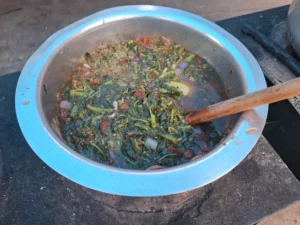
Soaking up the smells and sounds of a cooking class.
This cooking class was slow and relaxed, enabling me to observe life unfolding around me. Even though everything is completely different from my own country, it felt like I was visiting a relative’s home. Aminatha’s phone occasionally rang during the 3.5 hour class, her ringtone an upbeat Mbilia Bel song, a famous female rhumba singer from the Democratic Republic of the Congo. Aminatha answered in one of the five languages she speaks – Kinyarwandese, Swahili, English, French, or Congolese – while pointing me to stir and add ingredients as she chatted.
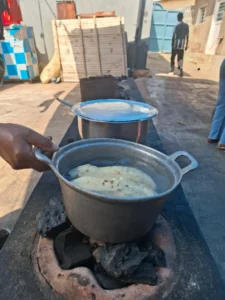
A cooking class is always followed by a huge meal.
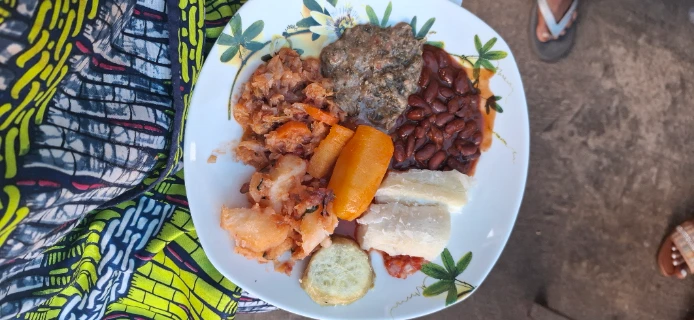
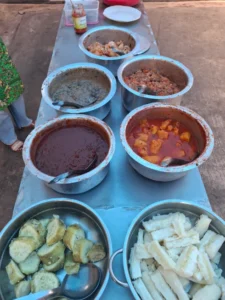
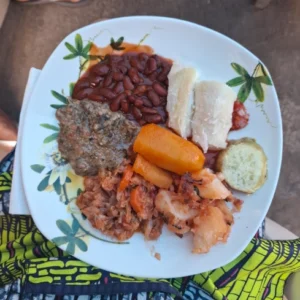
We prepared a massive amount of traditional Rwandan food during our cooking class. I experienced true Rwandan hospitality as we dug into our feast. Just as we were organizing all our dishes on the table, a friend stopped in to chat with Aminatha, and she was invited to join our meal. We perched on plastic chairs and in doorways to eat a vegetarian feast together: Irish potatoes (ibirayi), cassava (umwumbati), sweet potatoes (ikijumba), plantain (inyamunyo), cabbage-based vegetable mix, amaranth (dodo) in peanut sauce, and delicious beans (ibishyimbo).
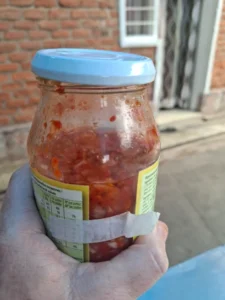
Chili sauce is optional, but delicious!
While Rwandan food is not prepared with hot peppers, some families like to add chili sauce on the side. Aminatha brought out her own homemade sauce, stored in the typical African way: a repurposed glass mayonnaise jar. I cautiously spooned a small amount onto my plate, having learned the hard way that these homemade recipes can pack a serious punch. It added just the right kick to the boiled cassava and was an amazing compliment to the beans.
I ended my cooking class with a full stomach and new friends.
By the end of the class, I felt full, happy, and felt right at home. The traditional cooking class at a home gave me a glimpse of modern Rwandan food and culture through the lens of daily life of Nyamirambo. I left cooking class with a recipe book and a full stomach, a new friend, and new Kinyarwandese vocabulary that I will use next time I travel to Rwanda: Muryoherwe (the equivalent of “bon appetit”), Ndahaze ( I’m full), and Marakoswe (thank you).
Curious to know more about what to eat in Kigali? Check out our Jiranileo Rwanda destination page for a downloadable guide to eating in Rwanda. Happy travels!
Meet the Author
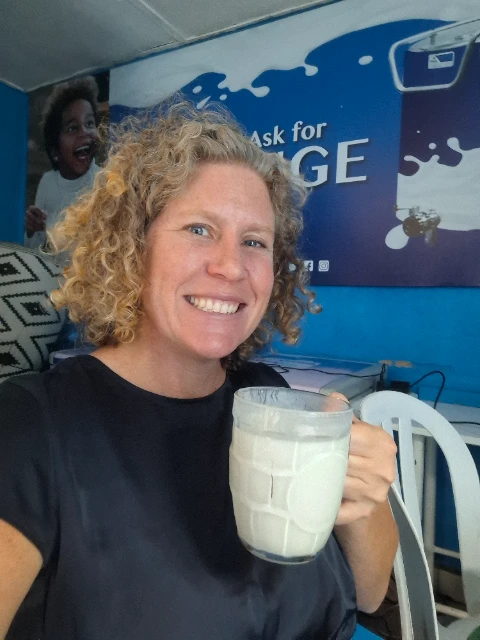
Beth Jere
After traveling to over 40 countries, Beth has learned that every country reveals itself best through its food and shared laughter over meals. Her blogs share her curiosity about the cuisines across the continent, one meal and one story at a time.